Readiness & Risk Assessment
The foundational step to understand what personal data you process, identify compliance gaps, and map out the risks affecting individuals' data.
What we do
Assess gaps, identify high-risk systems, and create a remediation roadmap.
The Result
Clear visibility of risk exposure and prioritized actions instead of jargon.
Deliverables
Gap Assessment Report
Comprehensive analysis of existing controls vs DPDP mandates.
Risk Heatmap
Visual prioritization of high-risk processes and data clusters.
Discovery & Classification
Knowing what personal data you hold and where it's stored. DPDP expects the Data Fiduciary to have total system-level visibility.
What we do
Discover data across CRM, Cloud, and Email; map data flows across systems.
The Result
Reduced blind spots during audits and inputs for Zero-Trust initiatives.
Deliverables
Data Classification Register
Categorization by sensitivity, usage, and retention needs.
Data Flow Diagrams
Visual mapping of how data moves between your apps and vendors.
Notice & Consent Management
DPDP requires data processing to be purposeful and based on valid consent or clear lawful grounds.
What we do
Design consent withdrawal mechanisms and align privacy notices with actual processing.
The Result
Defensible consent records and transparent data usage governance.
Deliverables
Consent Management Framework
Infrastructure for capturing and logging data principal approvals.
Purpose-to-Processing Matrix
Legal mapping ensuring every byte collected has a lawful justification.
Principal Rights & Workflows
Individuals now have rights to access, correct, or delete data. You must respond within defined timelines.
What we do
Design workflows integrated with ITSM; define ownership and SLAs for requests.
The Result
Structured request handling and clear cross-functional accountability.
Deliverables
Data Principal Rights SOPs
Standard operating procedures for handling user inquiries.
SLA & Escalation Matrix
Timeline enforcement to ensure regulatory response windows are met.
Security & Breach Readiness
Reasonable security safeguards are a legal mandate. We ensure you are ready to detect and report breaches instantly.
What we do
Strengthen encryption and monitoring; create breach response playbooks.
The Result
Faster breach response and reduced regulatory impact.
Deliverables
Breach Response Playbook
Actionable steps to take the moment an incident is detected.
Security Controls Mapping
Direct alignment of existing IT controls to DPDP clauses.
Vendor & Third-Party Governance
Your compliance is only as strong as your weakest vendor. We establish oversight for all Data Processors.
What we do
Review vendor contracts for DPDP clauses; establish compliance checks.
The Result
Reduced third-party risk and improved overall audit readiness.
Deliverables
Vendor Data Register
Inventory of all processors and the data they handle.
Contractual Clause Checklist
Required legal language for Master Service Agreements.
Continuous Compliance
DPDP is not a one-time project. As your business evolves, your compliance must stay current.
What we do
Monitor new systems; update inventories; provide quarterly reports.
The Result
Always audit-ready posture with reduced internal workload.
Deliverables
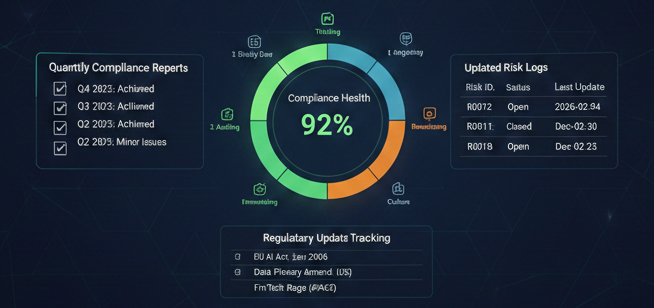
Executive Compliance Dashboard
Real-time monitoring of your organization's compliance health across all 7 phases.
- Quarterly Compliance Reports
- Updated Risk Logs
- Regulatory Update Tracking