Progressive Infotech (Workelevate) Recognized in the 2025 Gartner® Magic Quadrant™ for Digital Employee Experience Management Tools for the Second Consecutive Year

DPDP Act

Stay compliant with the DPDP Act 2023. Discover how your organization can manage personal data, reduce risk, and build trust with strong privacy practices.

We’re a ₹500 Crore Company.

“We’re a ₹500 Crore Company. How WouldWe Ever Pay a ₹250 Crore DPDP Fine?”

The question every CFO asks In almost every DPDP conversation with a leadership team, someone does the arithmetic out loud. Take a ₹500 crore company. At a net margin of 5–8%, it earns ₹25–40 crore in profit after tax (PAT). The headline penalty under India’s Digital Personal Data Protection Act, 2023 is up to ₹250 […]

“We’re a ₹500 Crore Company. How WouldWe Ever Pay a ₹250 Crore DPDP Fine?” Read More »
DPDP Consent Manager Portal: What Businesses Need to Know

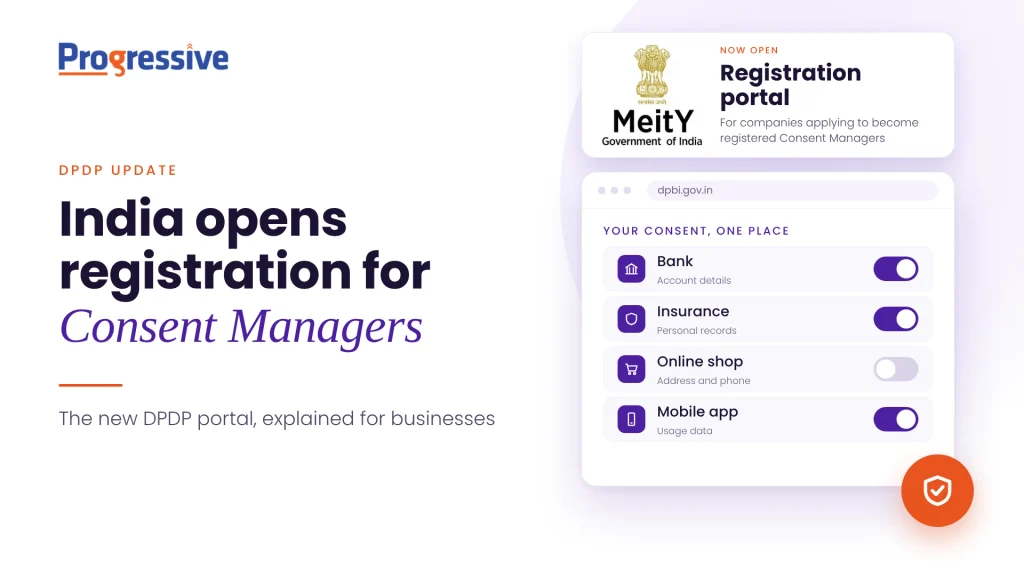
India Launches New DPDP Consent Manager Portal: What It Means for Businesses, Explained Simply

India has launched a new portal under its Digital Personal Data Protection (DPDP) framework. But does every business need to register? What is a Consent Manager? And what do terms like RoPA, Data Fiduciary and Consent Management actually mean? Here’s a simple guide. India has taken another step towards implementing its new data privacy law.

India Launches New DPDP Consent Manager Portal: What It Means for Businesses, Explained Simply Read More »

DPDP Act Penalties: Understanding the Cost of Non-Compliance

The DPDP Act backs its obligations with substantial financial penalties. These are not token fines — they are designed to ensure that compliance is economically rational for organisations of all sizes. The Act prescribes penalties up to INR 250 crore (approximately USD 30 million) for the most serious violations, such as failure to implement reasonable

DPDP Act Penalties: Understanding the Cost of Non-Compliance Read More »

Data Privacy Compliance in India: From Obligation to Competitive Advantage

India’s digital economy is growing at an unprecedented pace. With over 950 million internet users, rapid 5G adoption, and the world’s largest WhatsApp and social media user bases, the volume of personal data flowing through Indian businesses is staggering. The DPDP Act recognises this reality and establishes a framework to ensure that economic growth does

Data Privacy Compliance in India: From Obligation to Competitive Advantage Read More »

DPDP Act vs GDPR: A Comparative Analysis for Global Businesses

India’s DPDP Act and the European Union’s GDPR share a common objective: protecting individuals’ personal data rights. Both establish consent-based processing, purpose limitation, data minimisation, and individual rights as core principles. But the similarities end at the surface. In application, enforcement, and structure, the two laws diverge significantly. For multinational companies operating in both jurisdictions,

DPDP Act vs GDPR: A Comparative Analysis for Global Businesses Read More »

Significant Data Fiduciaries Under the DPDP Act: Heightened Duties, Greater Accountability

The Central Government has the authority to classify any Data Fiduciary or class of Data Fiduciaries as Significant Data Fiduciaries (SDFs) based on factors such as the volume and sensitivity of data processed, the risk to data principal rights, and the potential impact on India’s sovereignty, security, and integrity. While the specific criteria for designation

Significant Data Fiduciaries Under the DPDP Act: Heightened Duties, Greater Accountability Read More »

Data Breach Notification Under the DPDP Act: The 72-Hour Imperative

India’s DPDP Act introduces mandatory data breach notification for the first time in Indian law. Prior to this legislation, there was no clear legal obligation to report data breaches to regulators or affected individuals. The CERT-In reporting requirements existed but were primarily focused on cybersecurity incidents rather than personal data breaches. Under the new framework,

Data Breach Notification Under the DPDP Act: The 72-Hour Imperative Read More »

Data Fiduciary

What is a Data Fiduciary? Everything You Need to Know

As businesses continue to go digital, the amount of personal data being collected is growing rapidly. From websites to mobile apps, organizations collect user information to improve services. But who is responsible for managing this data? This is where the concept of a data fiduciary comes in. Understanding Data Fiduciary A data fiduciary is an

What is a Data Fiduciary? Everything You Need to Know Read More »

Consent Management Under the DPDP Act: Building a Compliant Framework

The DPDP Act places consent at the centre of its regulatory architecture. Unlike some jurisdictions that offer multiple legal bases for processing (legitimate interest, contractual necessity, etc.), the DPDP Act primarily relies on consent and a narrow set of “legitimate uses” defined in Section 7. This means that for most commercial data processing, obtaining valid

Consent Management Under the DPDP Act: Building a Compliant Framework Read More »

Data Principal Rights Under the DPDP Act: What Individuals Can Demand

The DPDP Act empowers Indian citizens with a set of enforceable rights over their personal data. These rights shift the balance of power from organisations that collect data to the individuals who own it. For the first time in Indian law, individuals have a clear, statutory mechanism to control how their data is used. These

Data Principal Rights Under the DPDP Act: What Individuals Can Demand Read More »

Scroll to Top