
AI has permanently changed the economics, velocity, and impact of cyber risk. For enterprises, cybersecurity is no longer a technical discipline focused on blocking attacks it is a core business capability that determines resilience, trust, and long-term value creation.
Boards now view cyber risk as a direct threat to shareholder value, while CIOs and CISOs are being asked to secure aggressive AI adoption, manage regulatory volatility, and demonstrate measurable business outcomes—all at once. This moment demands a reset in how leaders think about cybersecurity: less fear, more clarity; less control obsession, more resilience; less tools, more outcomes.
AI Has Changed the Threat Model
AI is not just another technology wave layered onto existing security programs. It fundamentally reshapes both sides of the battlefield:
1. AI-Accelerated Attacks
Threat actors now use AI to:
- Generate highly personalized phishing and deepfake attacks at scale
- Automate reconnaissance and exploit discovery
- Bypass traditional signature-based detection
As a result, the attack surface is expanding faster than most organizations can inventory, let alone protect.
2. AI Adoption in Enterprises
At the same time, enterprises are rapidly adopting:
- Generative AI tools (often outside formal approval processes)
- Agentic AI that acts autonomously on business systems
- Decentralized data usage across teams, clouds, and partners
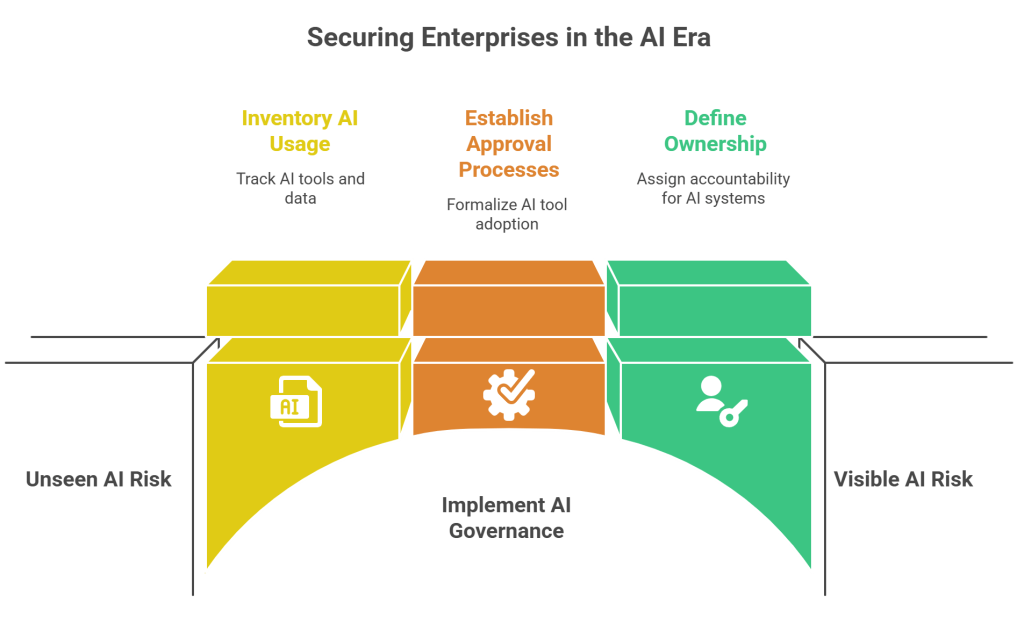
This creates “shadow AI” risk, where sensitive data, identities, and APIs are exposed without clear ownership or accountability.
The uncomfortable truth: You cannot secure what you do not see, and you cannot govern what the business moves faster than IT can approve.
Why Cybersecurity Is Shifting From Protection to Resilience
For years, cybersecurity success was framed as prevention: fewer incidents, fewer alerts, fewer breaches. In the age of AI, that framing is no longer credible.
Boards now expect CISOs to focus on minimizing business harm when incidents occur, not just preventing them.
This drives three strategic shifts:
1. “When, Not If” Becomes the Baseline
AI increases both the likelihood and sophistication of attacks. Zero incidents is no longer a realistic KPI. The new questions are:
- How quickly can we detect?
- How effectively can we respond?
- How fast can we recover critical operations?
2. Response Outweighs More Controls
Many organizations are over-invested in prevention but under-prepared for coordinated response. Incident response, digital forensics, automation, and recovery capabilities now represent the largest maturity gap in most security programs.
3. Metrics Must Speak Business Language
Boards do not want tool metrics. They want answers like:
- Time to contain a revenue-impacting incident
- Data exposure risk tied to regulatory penalties
- Resilience of critical business processes
Cyber resilience metrics—grounded in business impact analysis—are replacing abstract risk scores.
Governance in the AI Era: Influence Over Ownership
AI adoption is pushing CISOs beyond traditional security boundaries into:
- Data governance and privacy
- Identity for machines and AI agents
- AI usage policy and accountability
- Regulatory readiness across jurisdictions
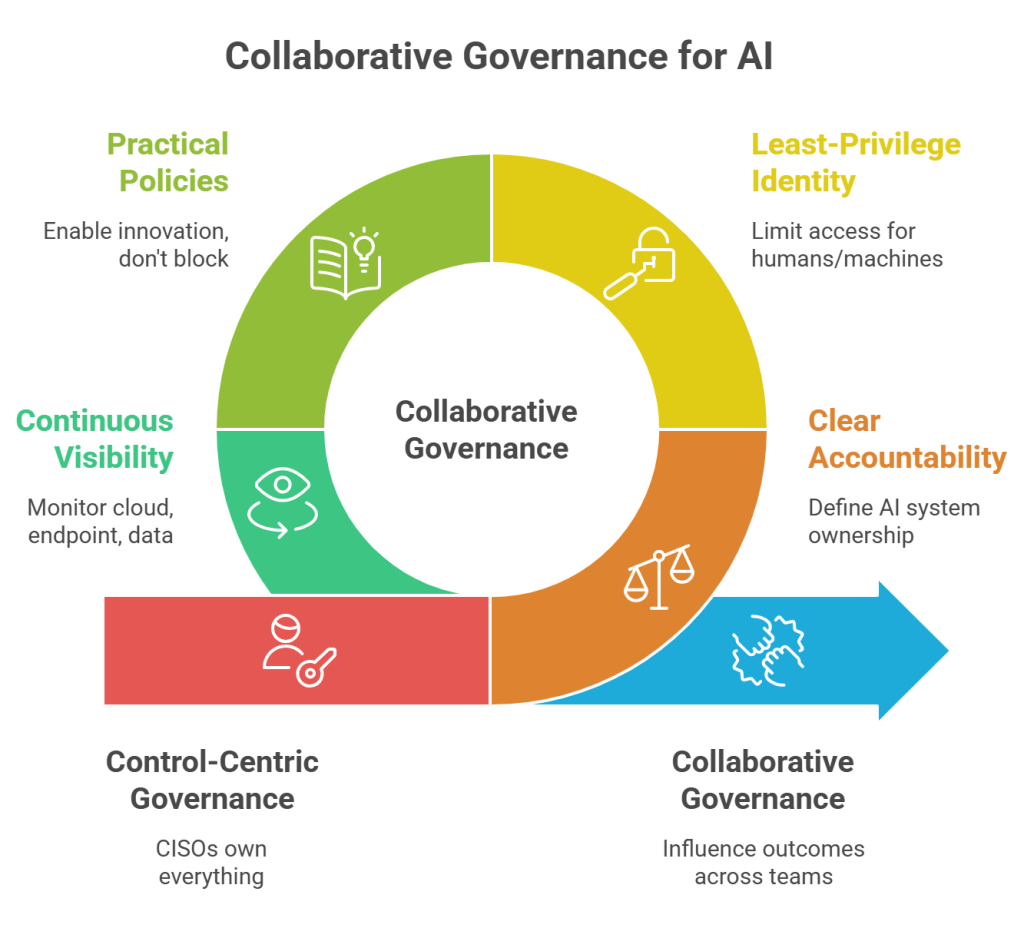
This expanded remit does not mean CISOs should own everything. Successful leaders are shifting from control-centric governance to collaborative governance, influencing outcomes across IT, legal, data, and business teams.
Key characteristics of modern cyber governance:
- Clear accountability for AI systems and data usage
- Least-privilege identity for humans and machines
- Practical policies that enable innovation rather than block it
- Continuous visibility into cloud, endpoint, and data activity
Security Operations in the new AI World
AI is also reshaping the Security Operations Center (SOC):
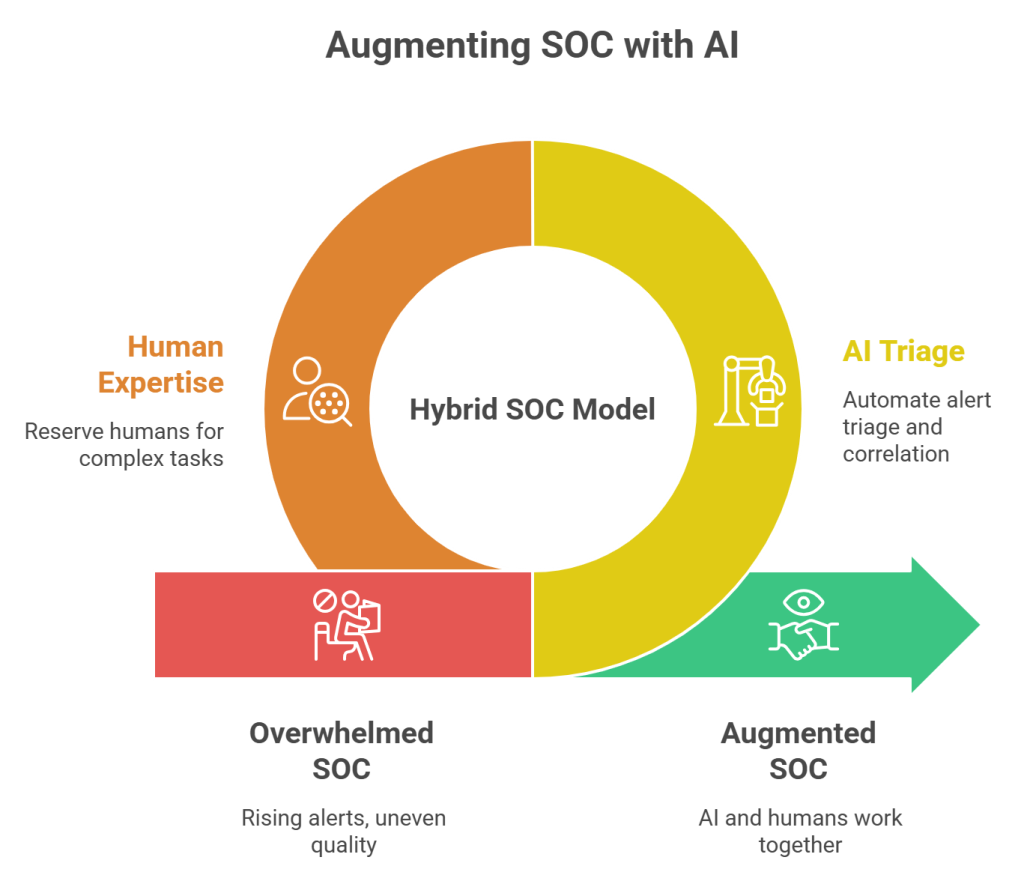
- Alert volumes are rising, but signal quality is uneven
- Automation improves efficiency but risks skill erosion
- Human judgment remains essential for complex investigations
The most effective SOCs are not replacing analysts with AI; they are augmenting them—using AI for triage and correlation, while reserving human expertise for threat hunting, validation, and response decisions.
This hybrid model AI at machine speed, humans at business speed is becoming the new operational standard.
Cybersecurity as a Business Enabler
In the age of AI, cybersecurity directly enables:
- Faster and safer AI adoption
- Regulatory confidence and audit readiness
- Customer trust and brand resilience
- Board-level confidence in technology leadership
Organizations that treat cybersecurity as a bolt-on function will struggle. Those that integrate it into digital strategy, cloud transformation, and data programs will move faster with less risk.
A Subtle Reality Check
As security becomes more complex, few organizations can sustainably build all capabilities in-house especially across 24×7 monitoring, advanced threat detection, forensics, and regulatory alignment.
This is why many enterprises are quietly moving toward integrated managed security models combining strategic advisory, AI-enabled operations, and continuous improvement without losing control or context.
At Progressive, our Managed Security Services approach reflects this shift: aligning risk assessment, AI-powered security operations, security hardening, and implementation around business outcomes and resilience, not just tools or alerts.
Not as a replacement for internal teams but as a force multiplier when the stakes are highest.
Cybersecurity in the age of AI is no longer about building higher walls. It is about building organizations that can absorb shocks, adapt quickly, and keep the business moving forward securely and confidently.