
AI-Powered
Global Service Desk

A single point of contact for global IT support
A Global Service Desk is the single point of contact (SPOC) that connects your distributed workforce to IT support, independent of location, device, or time zone. Hardware issues, software errors, connectivity failures, and access requests are logged, triaged, and resolved remotely, without dependency on a local IT team or a site visit.
Progressive Techserve's Global Service Desk is built on remote-first resolution. Our engineers access user endpoints securely, diagnose the issue, and remediate it in the same session, backed by 28+ years of managed IT services experience and a delivery model that runs 24x7 across geographies.
The outcome for your organization: fewer escalation paths, lower mean time to resolution (MTTR), and one accountable partner owning the end-to-end support SLA.
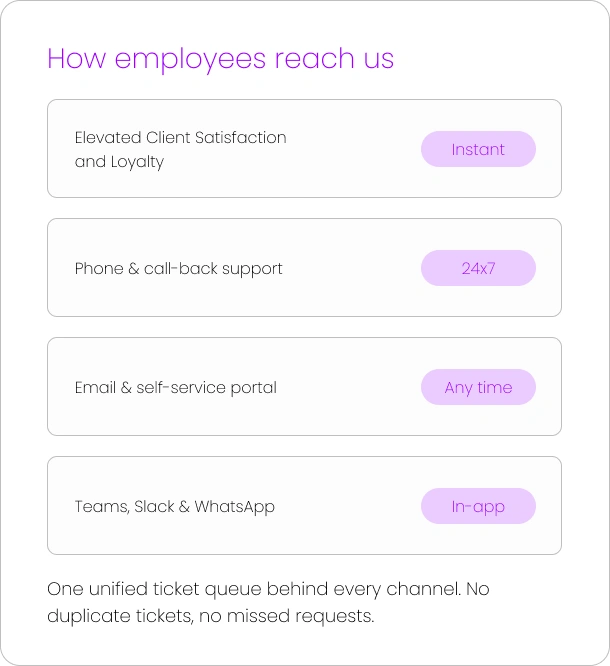
Automation-led support for remote and global teams
Distributed teams span multiple time zones and channels. Our service desk pairs AI-driven self-service with remote engineer support, so every request reaches resolution through the fastest available path.

Conversational AI self-service
An AI assistant resolves routine, high-volume requests instantly, including password resets, access provisioning, and standard how-tos, reducing ticket volume at the source.
Remote diagnostics and remediation
Engineers securely connect into any endpoint to diagnose and remediate issues in real time, along with remote troubleshooting silently ,eliminating the need for an on-site visit.
Context-aware escalation
When a request requires a human, the AI assistant escalates to a live engineer with full ticket context carried over, so the employee doesn't repeat the issue.
Omnichannel support
Support is available through Teams, Slack, WhatsApp, email, and the self-service portal, all unified into a single ticket queue for consistent SLA tracking.
Proactive endpoint monitoring
Lightweight agents on user devices detect performance degradation and trigger self-healing scripts before the employee raises a ticket.
Ticket analytics and reporting
Every interaction feeds a reporting layer that identifies recurring issues, tracks SLA and XLA performance, and directs the next automation priority.
Remote access built for compliance requirements
Supporting a hybrid, distributed workforce remotely requires the same security and governance standards as on-premise IT support.
Encrypted remote sessions
Every remote connection into an endpoint runs over an encrypted, logged session, reducing the risk exposure of a distributed workforce.
Access &
Identity controls
Role-based access and verification steps ensure only the right engineer touches the right endpoint, every time.
Compliance-ready reporting
Full audit trails of remote sessions and ticket handling, mapped to your organization's hybrid-work compliance requirements.
End-to-End Remote IT Support for Global Operations
Six coordinated capabilities, delivered as a single service rather than six separate line items to manage.
24x7
Global Coverage
Support across global time zones and digital channels, so no region waits outside business hours.
L1 and selected L2 management
Workplace incidents and service requests are managed directly, without unnecessary escalation.
Business application support
First-line support for common access and usage issues across the applications employees rely on daily.
Ticket lifecycle management
Creation, classification, routing, escalation and status updates, handled end to end and tracked against SLA.
VIP & major incident support
Dedicated VIP handling, multilingual options and coordinated response for major incidents.
Governance &
reporting
Shared or dedicated delivery models with SLA management, reporting and governance built in.
Not every request needs the same resolution path
Repetitive, well-understood issues should be automated. Issues that require diagnosis, judgement or coordination should reach skilled analysts, quickly and with full context.
Workelevate, Progressive's Digital Employee Experience platform with AI Copilot and Unified Endpoint Management, enables conversational troubleshooting, enterprise knowledge search, service workflows and ticket automation.
When analyst intervention is required, relevant user, device and ticket context travels with the request, cutting resolution time and unnecessary hand-offs.
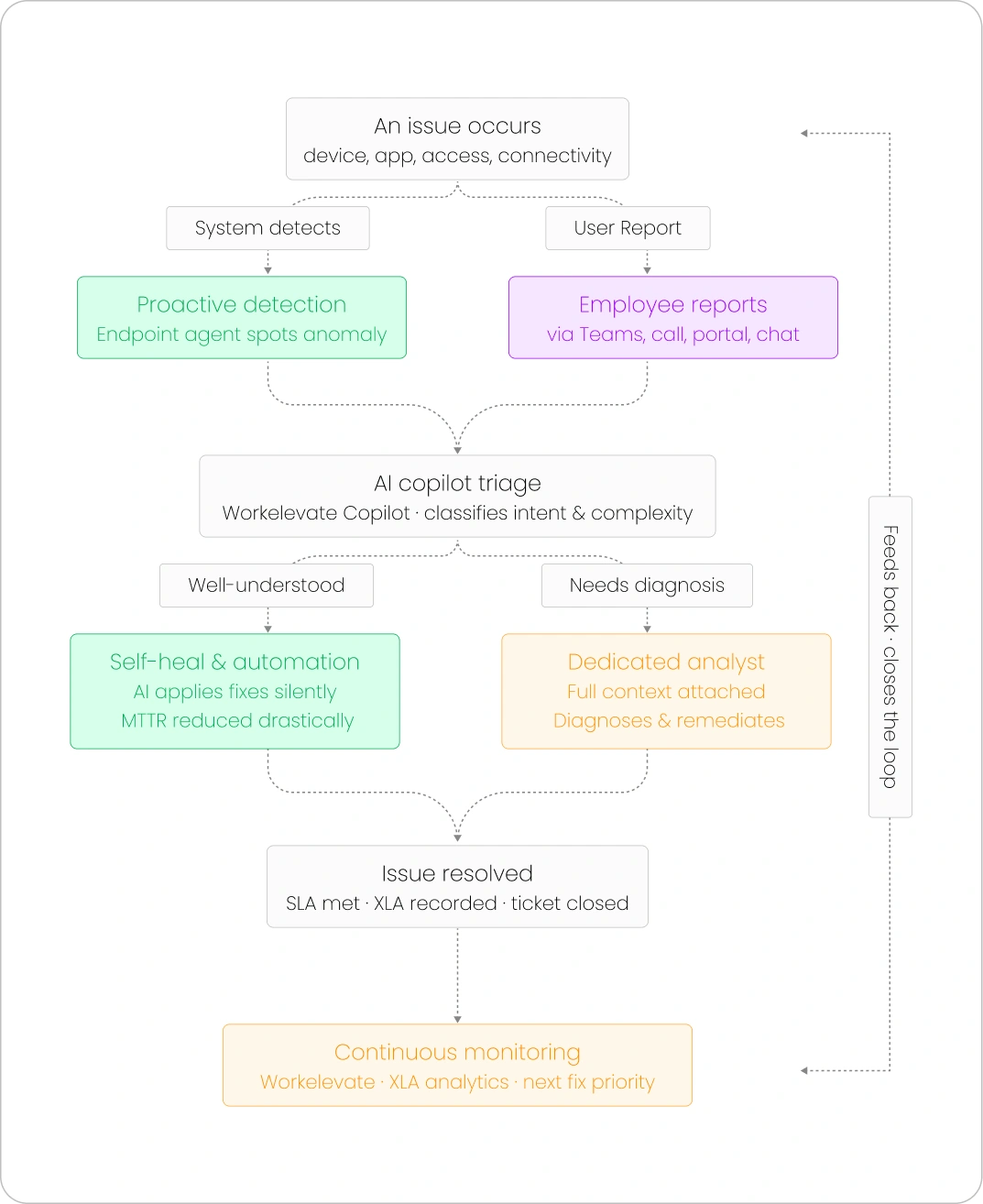
Where Progressive's desk sits in your escalation chain
Clear ownership between the service desk and your specialist or application-owner teams keeps handoffs predictable.

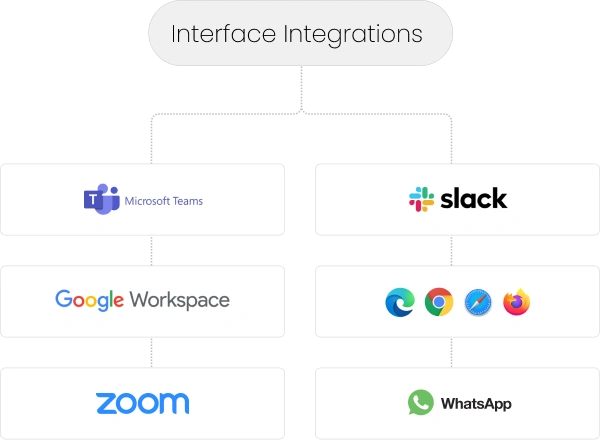
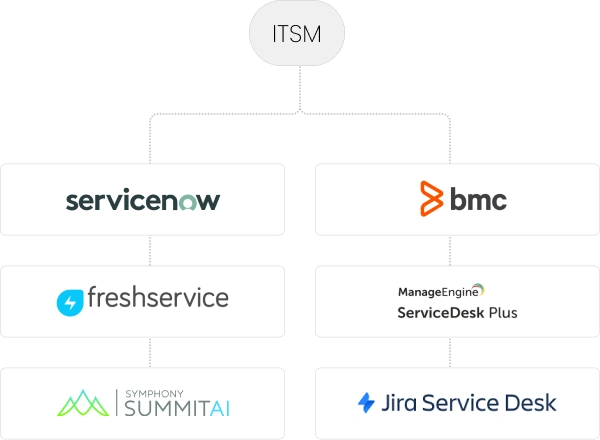
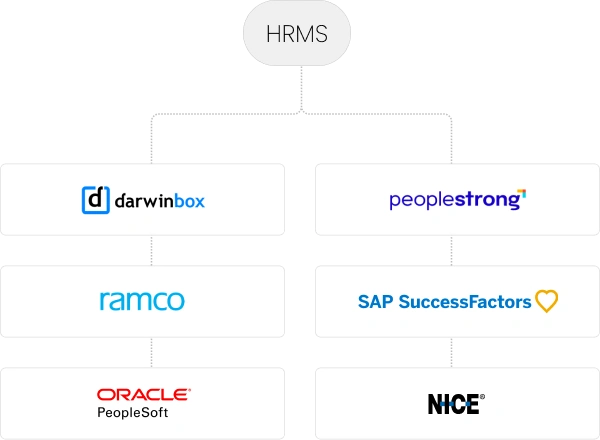
Integrates into the tools you already run
What a managed service desk changes for you
The desk is measured on the outcomes that matter to IT leaders — cost to serve, resolution speed, employee experience and the load taken off your specialist teams.
Lower
cost to serve
Repetitive demand shifts to self-service and automation, reserving analyst time for where expertise genuinely adds value.
Higher
First-contact resolution
The AI Copilot closes common requests on first touch, so fewer tickets ever need a second interaction.
Faster
Resolution times
Less waiting, less routing and no repeated information-gathering — context travels with every request.
Scalable
24×7 without linear headcount
Support capacity grows with genuine complexity, not in direct proportion to raw ticket volume.
Lighter
Specialist-team load
More routine issues get resolved before they ever reach L3 or an application owner.
Better
Employee experience (XLA)
We tune the desk against experience metrics and end-user sentiment — not ticket counts alone.
Global IT Service Desk
Outsourcing –
FAQ's
Find answers to the most common questions about our global IT service desk.
Talk to ExpertYes. Our Global Service Desk runs on a distributed delivery model with support engineers across geographies, backed by automation, so coverage is continuous. We also offer support customized to your organization's business hours in specific time zones.
Yes. With a global presence, we provide support across varying time zones and countries through a follow-the-sun model, so support handoffs happen without gaps in coverage.
We integrate the assistant using APIs from the messaging platforms you already use, including Microsoft Teams, Slack, Google Workspace, and WhatsApp. Configuration is customized to your organization's ticket categories and escalation rules.
A lightweight monitoring agent runs on the end-user's system, triggering self-healing scripts and alerting the IT team as soon as a performance issue is detected, in most cases before the employee notices any impact.
The assistant can start a chat or arrange a callback with a live engineer, who can then remotely access the user's device to resolve the issue. If a user asks for a person directly, the chat is transferred instantly with full context intact.
We run a compliance framework covering data privacy, data security, and industry-specific regulatory requirements, applied consistently to every remote session and support interaction across your hybrid workforce.
We follow an XLA-driven approach: capturing end-user feedback, analyzing support trends, and refining the service desk against employee experience metrics, not just ticket volume.